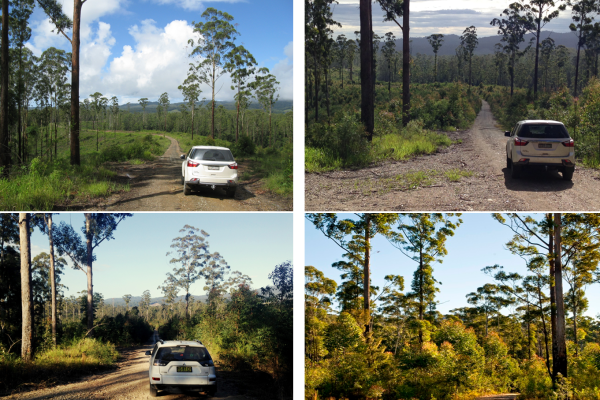
It all begins in the forest. All NSW commercial native hardwood forests or hardwood plantations are harvested under strict regulation. Forest science provides the evidence that underpins the sustainable harvesting of NSW’s native and plantation forests. Native forestry is selectively harvested to balance environmental conservation, forest health and timber production.
Our Process
The Forest
NSW Harvest Planning
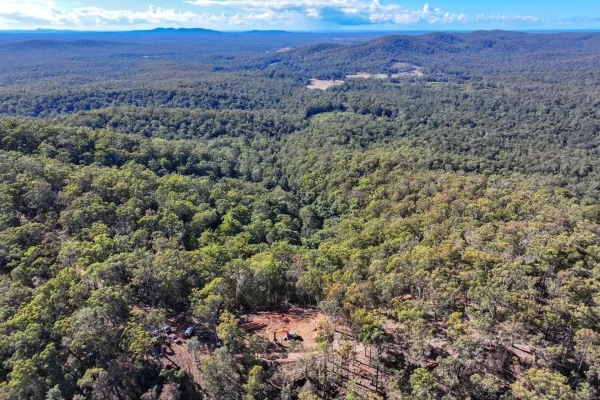
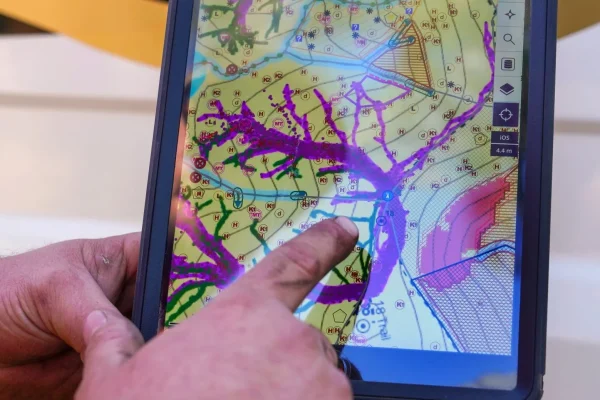
The state-owned NSW native hardwood forest coupes, with mixed age and species, have been set aside for sustainable timber harvesting. The timber harvesting process commences with a rigorous planning process to identify, monitor and protect the wildlife. These plans are approved with the regulator before harvesting begins. All trees within a harvesting coupe are individually assessed to retain the best trees for forest health.
NSW Forest Harvesting
The NSW public native hardwood forest coupes have been grown in multi-stories to retain mature habitat trees and some canopy cover for regeneration and future harvesting in a 100 year cycle. Experienced and skilled timber workers selectively harvest trees leaving identified seed and habitat trees to assist with regeneration and minimise impact to forest ecology.
NSW hardwood plantations are single species and planted like any crop for future timber harvesting. Hardwood trees have a long-growing cycle 30-50 years to reach full maturity suitable as high quality saw-logs. Trees are clear-felled in timber plantations and replanted for the next cycle. Not all hardwood trees are suitable for plantation growth. Plantations are at risk of fire during early stages of growth and disease and like any crop, can fail at times.

Forest Log Dump
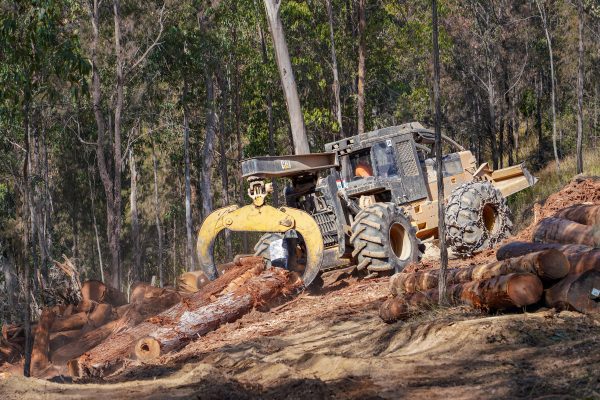
The forest log dump is a cleared area within the forest set aside to store logs that have been debarked, graded and sorted into piles.
Log Transportation
Logs are sorted and loaded onto the log trucks for transport to the sawmill processing site.

Log Yard
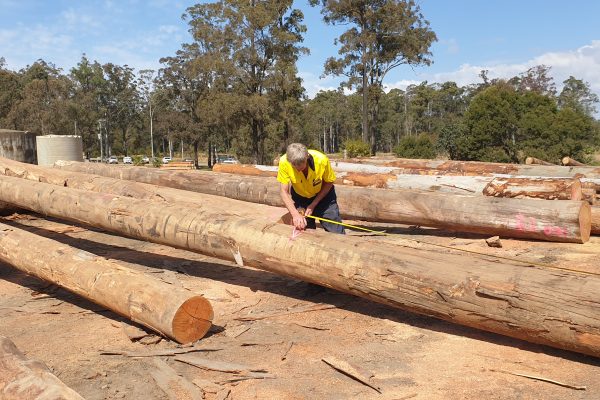
Trucks are unloaded and sorted in the sawmill log yard. Our log yard team, inspect, review grade and initially saw into lengths suitable for further processing.
Sawmill Processing
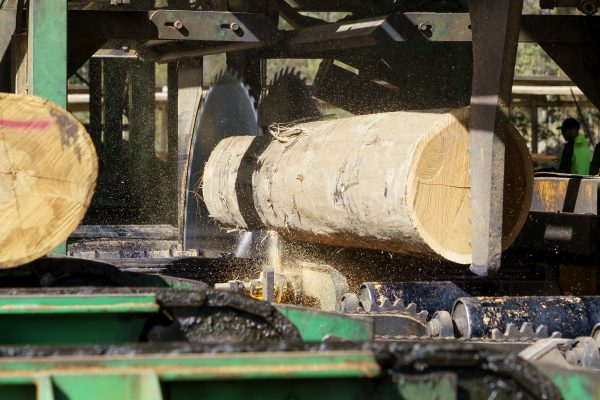
Logs are loaded onto the log deck to begin the breakdown process of converting a round log into a square/rectangle. Using a modern twin edger breakdown saw the sawyer examines and opens the log for further processing. Each log has its unique properties and experienced sawyers consider defects and curvatures to maximise log recovery into sawn product.

Hardwood Sawing
Following the initial log breakdown, the slabs of timber continue through the mill to saw benches and are cut into the finished product. Docking stations then finalise the appropriate length. Saw log recovery is considered and maximised at each step.
Timber Stacking
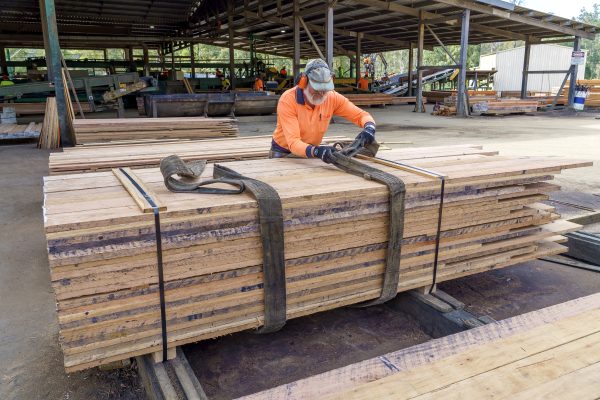
Timber is stacked and strapped ready for transport. Depending on the end use of the wood product, some timbers are independently inspected before leaving the yard.
Timber Yard
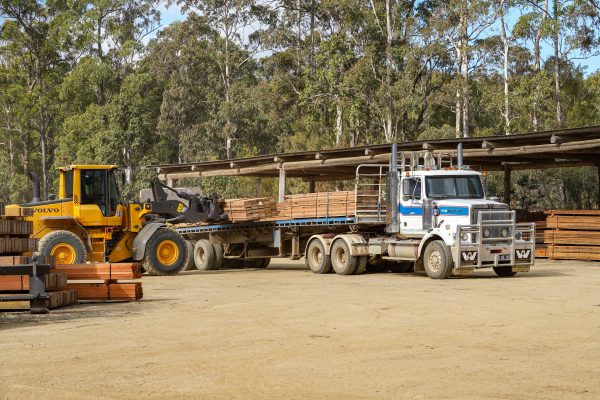
Green sawn timber is stacked ready to be loaded onto trucks for customer delivery.
Forest Replanting/Regeneration
The cycle of forest farming is similar to other crops, just with a much longer growth period. As carbon is stored for long periods in wood products, new trees are being replanted or regenerated ready for the next harvest. Start with a forest and end with a forest.